China Best Cooler Refrigeration Unit Manufacturer?
Choosing the China Best Cooler Refrigeration Unit Manufacturer requires more than comparing prices or factory photos. A reliable evaluation examines cooling performance, compressor quality, insulation, temperature control, energy use, and after-sales support. These details decide whether a unit protects fresh food during a humid summer or struggles inside a crowded warehouse.
Professor Toby Peters, a respected cold-chain specialist at the University of Birmingham, has emphasized in substance, “The cold chain is a system, not a single machine.” That principle matters when selecting a Cooler Refrigeration Unit. A strong manufacturer should understand the complete application, including room size, product load, ambient temperature, door openings, and local service conditions. It should also provide clear technical data, testing records, installation guidance, and realistic maintenance advice.
Factory scale can help. It does not guarantee dependable refrigeration. Some suppliers present impressive catalogs but offer limited engineering support after shipment. That weakness is easy to miss. Buyers should request performance evidence, component brands, warranty terms, and references from comparable cold-storage projects. Energy efficiency also deserves careful review because a cheaper unit may create higher electricity costs over time.
This guide compares practical indicators for identifying a capable Chinese manufacturer. It considers production experience, customization ability, safety-focused design, quality control, and communication during the project. No supplier is perfect. Even experienced buyers can overlook climate conditions or service response times. Careful questions reduce that risk and lead to a Cooler Refrigeration Unit that performs consistently in real operating environments.
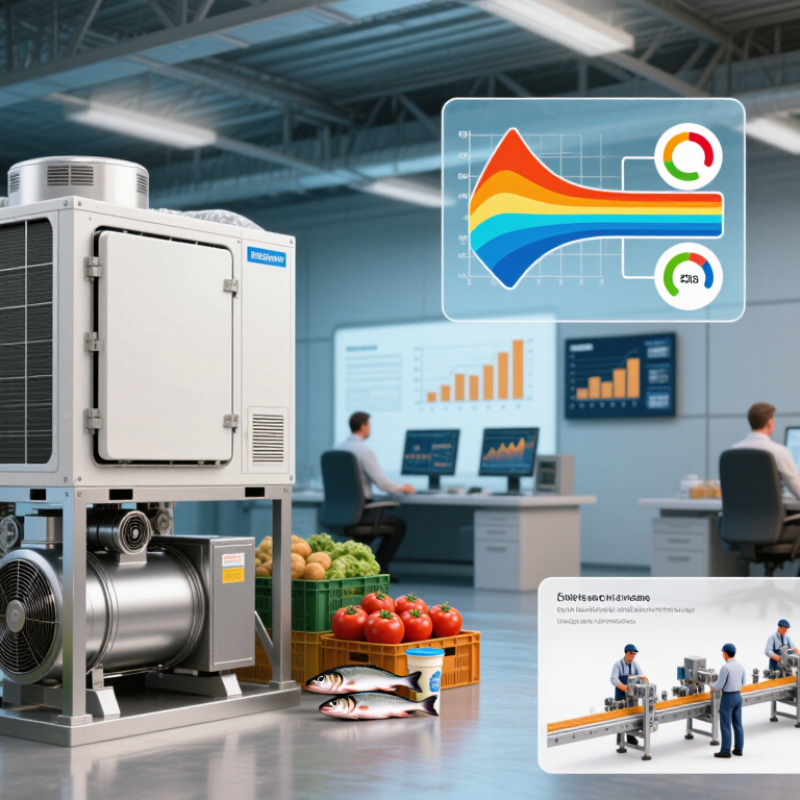
What Is a Cooler Refrigeration Unit?
A cooler refrigeration unit is a mechanical system that removes heat from an insulated space. It keeps stored products within a controlled temperature range. The main parts include a compressor, condenser, expansion device, evaporator, thermostat, and refrigerant circuit. The evaporator absorbs heat inside the cooler. The condenser releases that heat outside.
In practical installations, airflow matters as much as cooling capacity. A blocked condenser can raise energy use and shorten compressor life. Dust on the coil is easy to overlook. The unit should match the cooler’s volume, insulation quality, door opening frequency, and local ambient temperature. A small unit may run continuously. An oversized unit may cool quickly but control humidity poorly.
Reliable manufacturers usually provide technical data, service guidance, and tested performance information. However, “best” does not mean the same for every project. A seafood cooler may need different control settings than a vegetable room. I have also seen installation errors mistaken for equipment failure. Poor drainage, loose sensors, and incorrect airflow can create unstable temperatures. Regular inspection helps, but it is not a perfect solution. Real operating conditions should guide the final selection.
What Is a Cooler Refrigeration Unit?
A cooler refrigeration unit is a system that removes heat from an insulated room, cabinet, or container to maintain a controlled storage temperature. The required setpoint depends on the product, with chilled foods generally kept above freezing and frozen foods maintained at approximately −18°C or below.
Note: These are representative storage setpoints. Actual operating temperatures vary according to product requirements, local food-safety regulations, loading conditions, defrost cycles, and equipment design.
How Chinese Cooler Refrigeration Units Are Designed and Built
How Chinese Cooler Refrigeration Units Are Designed and Built
Chinese cooler refrigeration units are developed around temperature stability, energy use, and installation conditions. Engineers begin with the cooler’s volume, target temperature, door frequency, and local climate. These details determine compressor capacity, evaporator size, condenser airflow, and insulation thickness. A unit for frozen products needs different settings from one used for fresh vegetables.
Material selection matters. Copper tubing carries refrigerant through carefully formed circuits. Aluminum fins increase heat-transfer surface area inside the evaporator and condenser. Technicians braze each joint, then perform pressure testing with dry nitrogen. They also check for leaks before charging the system. Small errors can create large service problems later.
Assembly usually follows controlled production steps. Workers install the compressor, fan motors, electrical controller, sensors, and protective housing. Each unit should pass running tests in a temperature-controlled area. Test records may include suction pressure, discharge pressure, current draw, noise, and pull-down time. Practical experience still matters. A sensor can pass inspection but perform poorly after installation.
Not every design decision is perfect. Some compact units save space but make maintenance harder. Some low-cost insulation choices reduce initial expense, yet increase energy consumption. Reliable manufacturers review field feedback and adjust designs instead of defending every old method. Clear wiring, accessible service panels, corrosion-resistant surfaces, and accurate manuals improve long-term use. This is where manufacturing discipline becomes visible.
Which Technical Features Define a High-Quality Unit?
China Best Cooler Refrigeration Unit Manufacturer?
Which Technical Features Define a High-Quality Unit?
A high-quality cooler refrigeration unit begins with measured performance, not attractive specifications. The International Energy Agency reports that cooling uses about 10% of global electricity. Therefore, compressor efficiency matters during every operating hour. Check the tested COP, cooling capacity, and power input under defined ambient conditions. EN 14511 testing gives these figures a reliable comparison basis. A unit rated at 5°C may perform very differently inside a hot warehouse.
Temperature stability is equally important. Look for digital controllers, calibrated sensors, adaptive defrost, and alarms for high temperature or pressure. A strong system should recover quickly after door openings. Its evaporator needs even airflow, while EC fans can reduce unnecessary energy use. UNEP’s 2022 Cooling Emissions and Policy Synthesis Report warns that cooling demand could more than triple by 2050. Efficient controls are no longer optional. Still, a lower energy number does not guarantee better operation.
Tips: Ask for full-load and part-load test data. Inspect pipe insulation, drain heating, oil return, and service access. Review refrigerant safety and environmental data. Technicians often discover weak performance through poor installation, not poor components. That detail deserves attention. A useful specification should also show noise levels, restart behavior, and maintenance intervals. Some buyers overlook these points, and that is an expensive mistake.
How to Assess a Manufacturer’s Quality and Certifications
Choosing the best cooler refrigeration unit manufacturer requires more than comparing prices. Cooling equipment often runs continuously, so small efficiency losses become expensive. The International Energy Agency reports that cooling represents nearly 10% of global electricity consumption. This makes verified performance a commercial issue, not merely a technical detail.
Ask for the exact scope of ISO 9001 certification. It should cover design, production, testing, and after-sales control. ISO 14001 can indicate environmental management, while ISO 45001 addresses occupational safety. However, certificates alone are insufficient. Request certificate numbers, expiry dates, issuing bodies, and factory locations. Then verify them independently. Look for testing against standards such as EN 14511 or ISO 5151, with measured cooling capacity, energy efficiency, noise, and high-ambient performance. The figures should match the exact model, refrigerant, and operating conditions.
Demand production evidence. A reliable manufacturer should show compressor traceability, pressure-test records, electrical safety checks, and final run-test reports. Independent laboratory results add credibility. The UNEP Global Cooling Watch report warns that cooling demand could more than triple by 2050, increasing pressure for efficient equipment. Yet one factory audit cannot prove every batch is perfect. I would also inspect sample units, packaging, wiring, drain design, and controller stability. Paperwork can look impressive. Field feedback may reveal weaknesses that certificates miss. Ask for installation references, warranty response times, and corrective-action records before signing.
How to Choose the Best Chinese Supplier for Your Needs
China Best Cooler Refrigeration Unit Manufacturer?
How to Choose the Best Chinese Supplier for Your Needs
Choosing a Chinese refrigeration supplier requires more than comparing online prices. Start by defining your cooling capacity, refrigerant requirements, installation space, and expected operating temperature. A unit designed for a small cold room may fail in a busy food warehouse.
Request technical drawings, compressor details, electrical specifications, and recent test records. Reliable suppliers should explain cooling performance at different ambient temperatures. Ask how they control product quality, from copper tubing to insulation thickness. Factory photos help, but a live video inspection offers stronger evidence.
Check production experience with similar applications. Ask for verifiable customer references, realistic lead times, spare-parts availability, and written warranty conditions. Confirm whether engineers can support commissioning and troubleshooting after delivery. Communication matters. Slow or vague replies may become expensive later.
Do not accept the lowest quotation automatically. Compare the full cost, including packaging, shipping, installation, maintenance, and replacement parts. An experienced buyer may still miss hidden weaknesses. No audit catches everything. I would request a sample inspection or independent pre-shipment test before paying the balance. Clear records, measurable specifications, and practical support usually matter more than polished sales language.