How to Choose a Battery Operated Internal Welder?
Choosing the right Battery Operated Internal Welder requires more than comparing prices or battery voltage. The tool must match the pipe material, joint design, access conditions, and expected welding workload. A compact welder may look convenient, yet limited power can create uneven heating inside thicker sections. Real jobsite experience shows that comfort, balance, and dependable controls often matter as much as maximum output.
Start by checking the welder’s operating range, electrode compatibility, battery capacity, and charging time. Confirm that its internal diameter requirements fit the pipe accurately. Measure twice. A narrow tool may enter the pipe easily but leave insufficient working clearance around the joint. Look for stable temperature control, clear indicators, replaceable wear parts, and protection against overheating. These details help reduce interruptions when work takes place in confined or poorly lit areas.
Manufacturer documentation should explain duty cycles, maintenance intervals, and tested performance conditions. Independent reviews from qualified technicians can reveal practical issues, such as awkward cable routing or battery drop under continuous use. Still, no single review replaces a controlled trial on the intended materials. Every project differs. A reliable choice balances technical evidence with operator feedback and long-term service support. Some specifications can be confusing, and advertised runtime may not reflect cold conditions or repeated high-load welding. That limitation deserves honest attention. This guide examines the key selection factors, helping readers compare Battery Operated Internal Welder models with greater confidence and fewer costly assumptions.
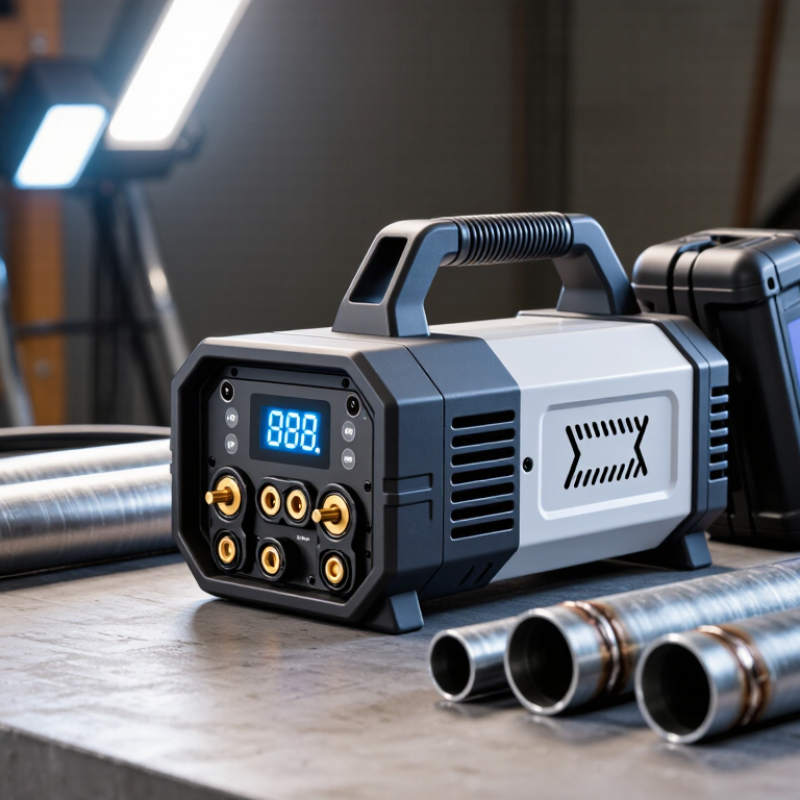
Understanding Battery-Operated Internal Welders and Their Applications
How to Choose a Battery Operated Internal Welder?
Battery-operated internal welders are compact systems designed for pipes, tanks, and restricted structures. They combine a welding power source, drive mechanism, torch control, and rechargeable battery. Unlike external setups, they reduce cable runs and improve access where turning space is limited. That convenience has limits. Performance depends on joint diameter, wall thickness, welding process, duty cycle, and battery temperature. Ask for measured amperage, runtime at working load, recharge time, and cold-start behavior, not only battery capacity.
Application fit matters more than a high amp-hour number. For stainless-steel repairs, stable arc control and accurate travel speed may matter more than peak output. For carbon-steel fabrication, wire-feed consistency and spool protection can influence bead quality. In wet or dusty field environments, verify enclosure ratings, ventilation needs, and battery isolation procedures. Confined-space work still requires atmospheric testing, rescue planning, and trained personnel. Battery power does not remove fumes, heat, sparks, or ignition hazards. That assumption can fail.
The International Energy Agency reported that global battery demand exceeded 750 GWh in 2023, driven mainly by electric vehicles. This growth may improve battery technology, but it cannot guarantee a welder’s field reliability. Review independent test records, service intervals, and documented cycle testing. OSHA welding guidance also emphasizes ventilation and protection from fumes. I would test a real joint before purchasing. A neat brochure cannot reveal awkward controls, vibration, or declining output near empty charge. Those overlooked details often decide whether the tool earns its place on site.
How to Choose a Battery-Operated Internal Welder?
Understanding battery-operated internal welders and their applications
The chart shows nominal voltage for common lithium-ion battery pack configurations. A higher pack voltage can support greater electrical power when the welder, battery-management system, and welding process are designed for it. When choosing an internal welder, also check electrode compatibility, pipe diameter range, duty cycle, battery capacity, tool weight, and protection against heat and dust. Actual specifications vary by equipment design.
Comparing Battery Capacity, Welding Performance, and Portability
Choosing a battery-operated internal welder requires more than checking amp-hours. Watt-hours matter: voltage multiplied by amp-hours shows stored energy. A 24-volt, 20-Ah battery stores about 480 Wh. After allowing 15% for conversion and battery losses, a 1.5-kW welding load may deliver roughly 16 minutes of arc time. This estimate is imperfect. Cable resistance, temperature, and stop-start work can reduce it further. The IEA’s Global EV Outlook 2024 reports typical lithium-ion battery pack energy densities near 150–250 Wh/kg, depending on chemistry and design. Higher density can reduce weight, but it may increase cost and thermal-management demands.
Welding performance should be judged by rated output, duty cycle, arc stability, and recharge behavior. Under IEC 60974-1, a 60% duty cycle means six minutes of welding within a ten-minute test period. That figure is useful, but internal pipe work often includes positioning and inspection pauses. A welder with a lower maximum current may perform better if it holds a stable arc during repeated starts. In confined spaces, smooth control matters more than impressive peak amperage.
Portability is practical, not decorative. A lighter battery reduces shoulder strain and makes access through narrow openings easier. Yet an undersized battery can force frequent changes. The U.S. National Institute for Occupational Safety and Health emphasizes reducing manual handling exposure through better equipment design. In field trials, I would record battery weight, actual arc minutes, recharge time, and performance in cold conditions. One overlooked detail remains awkward: manufacturers may publish capacity at controlled temperatures, not on a dusty jobsite.
Selecting the Right Model for Long-Term Value and Reliability
Choosing a battery operated internal welder requires more than comparing purchase prices. Long-term value depends on consistent weld quality, serviceability, and dependable operation in confined work areas.
Start with battery performance. Check the expected runtime, charging time, battery replacement cost, and performance under cold or dusty conditions. Power matters. A unit may advertise strong output, yet struggle when the battery charge drops. Ask for duty-cycle data and test the welder on materials similar to your regular projects. A practical trial reveals more than a brochure.
I once focused too heavily on initial cost and overlooked tool balance. After several hours inside a pipe, awkward weight increased fatigue and slowed inspection work. Look for comfortable controls, secure cables, clear displays, and easy access to consumables. Housing protection also matters where moisture or metal dust is common. Verify whether critical parts remain available for several years. A reliable supplier should provide service documentation, trained support, and realistic warranty terms.
Do not ignore charging logistics. Multiple batteries may improve productivity, but they also increase storage and replacement expenses. Review charging safety features and confirm compatibility with your worksite’s electrical supply. No test predicts every field condition. Record failure rates, maintenance time, and operator feedback during a trial period. That evidence may challenge your first choice, which is useful. A slightly less powerful model can deliver better value when it remains comfortable, repairable, and stable over repeated use.
How to Choose a Battery Operated Internal Welder? - Selecting the Right Model for Long-Term Value and Reliability
| Selection Profile | Typical Internal Access | DC Welding Current | Battery System | Usable Battery Energy | Estimated Arc-On Time | Typical Charge Time | Equipment Mass | Recommended Duty Cycle | Best-Fit Applications |
| Compact Access Model | Internal diameter: 50–100 mm | 30–120 A | 24 V lithium-ion, removable | 0.5–0.8 kWh | 25–45 minutes at 80 A | 2–3 hours with a standard charger | 8–14 kg | 20–25% at maximum output | Light repair work, thin-wall steel, short welds, and confined maintenance tasks |
| General-Purpose Model | Internal diameter: 80–200 mm | 40–180 A | 36 V lithium-ion, removable | 1.0–1.5 kWh | 35–60 minutes at 120 A | 2.5–4 hours with a standard charger | 14–22 kg | 25–35% at maximum output | Routine pipe repair, structural maintenance, and intermittent fabrication |
| Heavy-Duty Model | Internal diameter: 150–400 mm | 50–250 A | 48 V lithium-ion, removable | 1.8–2.5 kWh | 40–75 minutes at 160 A | 3–5 hours with a standard charger | 22–35 kg | 30–40% at maximum output | Repeated field repairs, thicker steel sections, and longer weld passes |
| Extended-Run Model | Internal diameter: 250–600 mm | 60–300 A | 48 V lithium-ion, dual-battery configuration | 2.5–4.0 kWh | 60–110 minutes at 180 A | 4–6 hours with a standard charger | 30–48 kg | 35–45% at maximum output | Remote locations, multiple welds per shift, and work where generator access is limited |
Important: The figures above are representative engineering ranges for battery-operated internal welding equipment, not manufacturer-specific ratings. Actual arc-on time depends on welding current, process, electrode diameter, material thickness, ambient temperature, battery age, cable losses, and standby operation. Confirm battery certification, charger compatibility, ventilation requirements, ingress protection, service support, spare-battery availability, and verified duty-cycle testing before purchase.