How to Choose a High Pressure Regulator in 2026?
Choosing a High Pressure Regulator in 2026 starts with operating conditions, not a product label. A unit that looks suitable in a catalog may respond differently when inlet pressure drops, demand surges, or gas cools during expansion. Record the maximum and normal inlet pressures, required outlet range, flow rate, media, temperature, and connection type. Small details matter. An undersized regulator can cause pressure droop, while incompatible seals may wear or leak. Neither issue should be guessed away.
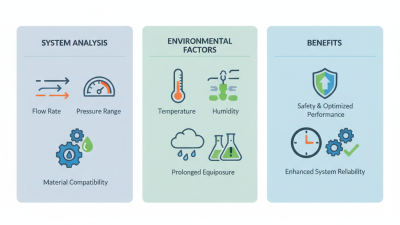
Compare the regulator’s rated limits with real system values, including startup and foreseeable pressure changes. Check body and seal materials against the gas or liquid, and confirm that the required flow is achievable at the expected inlet pressure. Review whether a single-stage or two-stage design better fits the application. Consider gauge placement, venting needs, maintenance access, and any protective devices specified by the system designer. Use current manufacturer data, and ask a qualified engineer or supplier to review uncertain requirements. Still, selection is not always tidy. Catalog flow figures may rely on test conditions unlike yours. That difference deserves attention. Before purchase, confirm the exact model, connections, pressure ranges, and service conditions in writing. A careful comparison helps prevent costly mismatches and supports stable, dependable pressure control.
Identify the Gas, Operating Conditions, and Application Requirements
A high-pressure regulator is not selected by inlet pressure alone. Identify the gas first: its composition, contaminants, and compatibility with wetted materials affect safe, stable operation. NIST’s Chemistry WebBook lists carbon dioxide’s critical point at about 31°C and 7.38 MPa. That matters when pressure and temperature could change the gas’s phase. Check the actual gas data, not just the cylinder label.
Next, write down the full operating window: maximum inlet pressure, required outlet pressure, flow range, temperature, and how often demand changes. A regulator serving a steady purge may behave differently from one supplying equipment with sharp flow swings. Match capacity and control range to the real application, then confirm the manufacturer’s published flow curves and pressure ratings. Industry guidance from the Compressed Gas Association also emphasizes gas-specific equipment selection and proper handling. Small detail, big consequence: verify connections and seals are compatible, too.
Tips: Record minimum and maximum pressures at the point of use. Include peak flow, not only average demand. Ask a qualified technician to review the selection; field conditions can be messier than the specification sheet suggests.
Compare Inlet Pressure, Outlet Pressure, and Flow Capacity
How to Choose a High Pressure Regulator in 2026?
Compare Inlet Pressure, Outlet Pressure, and Flow Capacity
Start with the full inlet-pressure range, not just the normal supply reading. A cylinder or process line can vary as pressure falls, and the regulator must remain within its rated maximum. Then set the required outlet pressure under real operating conditions. A regulator adjusted with no flow may deliver a lower pressure once equipment draws gas; this pressure change is called droop. Check the manufacturer’s performance curve at your actual inlet and outlet pressures. Port size alone is not a flow rating. Check the nameplate.
Flow capacity depends on gas type, pressure ratio, and the required downstream demand. Compare published capacity data using the same units and reference conditions, and allow for brief peak demand from valves or tools. For compressed-air systems, the U.S. Department of Energy’s Improving Compressed Air System Performance sourcebook recommends keeping pressure drop from the compressor to the point of use within 10% of compressor discharge pressure. That is a system-level guideline, not a regulator sizing rule, but it highlights why outlet pressure must be checked at the point of use. One detail is easy to miss: a tidy calculation may not reflect pulsing demand or changing supply pressure. Record those conditions, verify compatibility, and test the selected regulator in the installed setup.
How to Choose a High Pressure Regulator in 2026? — Compare Inlet Pressure, Outlet Pressure, and Flow Capacity
| Selection profile |
Typical maximum inlet pressure |
Typical outlet pressure range |
Indicative flow capacity (Cv) |
Common use |
Key selection check |
| Precision / low-flow |
Up to about 3,000 psi (207 bar) |
0–500 psi (0–34.5 bar) |
About 0.02–0.15 |
Instrument panels, calibration setups, and small gas supply lines |
Prioritize stable control at low flow and confirm the regulator’s minimum controllable flow. |
| General-purpose high pressure |
Up to about 6,000 psi (414 bar) |
0–1,500 psi (0–103 bar) |
About 0.1–0.6 |
Gas test stands, cylinder systems, and industrial process equipment |
Check the maximum inlet rating, required outlet setpoint, and expected flow at the actual operating pressures. |
| High-outlet-pressure service |
Up to about 10,000 psi (690 bar) |
About 500–3,000 psi (34.5–207 bar) |
About 0.05–0.4 |
High-pressure gas testing and specialized process systems |
Verify outlet-pressure capability and pressure containment; consider two-stage regulation where pressure stability is critical. |
| Higher-flow service |
Commonly up to about 3,000–6,000 psi (207–414 bar) |
Commonly 0–500 psi (0–34.5 bar) |
About 0.5–1.5 |
Systems with higher continuous demand or larger downstream lines |
Confirm the required flow with the manufacturer’s gas-specific sizing data; a larger Cv alone does not guarantee adequate flow. |
Important: These are representative selection ranges, not universal specifications or performance guarantees. Available pressure ranges and Cv values vary by regulator design, materials, gas, temperature, and connection type. Confirm the exact model’s maximum inlet pressure, outlet range, pressure rating, and flow curves. Flow capacity depends on gas properties and inlet and outlet conditions; use the manufacturer’s sizing method for final selection.
Select Compatible Materials, Connections, and Regulator Design
How to Choose a High Pressure Regulator in 2026?
Select Compatible Materials, Connections, and Regulator Design
Choosing a high pressure regulator starts with the gas or liquid it will control. Check the wetted materials against the fluid, operating temperature, and expected contamination. Stainless steel may suit many demanding applications, but compatibility depends on the exact process. Details matter. A seal that performs well in one service may swell, harden, or leak in another.
Match the inlet and outlet connections to the system, not just to the available fittings. Confirm thread type, size, pressure rating, and sealing method before installation. A connection that appears to fit can still be wrong. Also verify the regulator’s maximum inlet pressure and outlet range against actual operating conditions, including pressure changes during cylinder or line use.
Regulator design matters too. A single-stage model may be adequate where inlet pressure stays fairly stable; a two-stage design can provide steadier delivery as inlet pressure drops. Check required flow, adjustment range, and whether the application needs a relief feature. A common selection mistake is focusing on pressure ratings while overlooking flow demand. That is easy to miss. If specifications are incomplete, pause and confirm them with a qualified supplier or engineer rather than guessing. Record the chosen materials and connections so future maintenance does not rely on memory.
Check Safety Features, Certifications, and 2026 Compliance
How to Choose a High Pressure Regulator in 2026?
Check Safety Features, Certifications, and 2026 Compliance
Start with the regulator’s maximum inlet pressure, required outlet range, and expected flow. Check that its materials suit the gas or liquid, temperature, and operating environment. A unit that fits the pressure range may still perform poorly if flow demand causes outlet pressure to fall. Look for clear pressure ratings, readable gauges, and suitable overpressure protection. Confirm whether a separate relief device is required; a regulator alone may not protect downstream equipment. Small details matter.
Review certificates carefully. Verify which standards and pressure limits they cover, and request traceable test records and material documentation. A certificate logo alone does not prove that the exact regulator configuration meets your needs. Even experienced teams can overlook this. That deserves a second look. For 2026 compliance, confirm the current requirements for the installation’s location and application with the relevant authority or a qualified safety professional. Rules and adopted standard editions can differ by region, and updates may affect documentation or installation. Keep the records with the equipment, and check that the model, materials, and pressure ratings match the approved specification. A mismatch is easy to miss during purchasing. Check it before installation.
Verify Installation, Adjustment, and Maintenance Requirements
A high-pressure regulator should be chosen for the actual inlet pressure, outlet range, gas or liquid, and operating temperature. Check its rated limits against the system—not just the normal reading on a gauge. Confirm that fittings, tubing, and downstream equipment can handle the maximum pressure. A regulator is not a substitute for appropriate overpressure protection.
Installation details matter. Mount the unit in the position specified by its instructions, with enough clearance to read the gauge and reach the adjustment screw. Keep the inlet and outlet directions correct. Use clean, compatible connections, and support heavy tubing so it does not pull on the regulator body. Small details matter. Before pressurizing, check that vents and relief paths are unobstructed and that the assembly is secured.
Adjust pressure gradually while monitoring a suitable gauge, preferably under the conditions the system will actually experience. Turn the control in small increments, allow readings to settle, and check outlet pressure as flow changes. Go slowly. Never exceed the rated outlet pressure of connected equipment. For maintenance, isolate and fully depressurize the system before inspection; trapped pressure can remain even when a gauge reads zero. Look for leaks, corrosion, damaged seals, and unstable readings. Record adjustments and service dates. Set inspection intervals according to operating conditions and the regulator’s instructions. It is easy to postpone this paperwork, but missing records make recurring pressure drift harder to diagnose.
How to Choose a High-Pressure Regulator in 2026
Verify installation, adjustment, and maintenance requirements against the regulator’s documentation and the application’s operating conditions.
Illustrative bench-test example: Outlet pressure decreases as flow rises from 0 to 20 L/min. This is not a universal regulator performance curve. When selecting a regulator, compare the required flow and acceptable pressure droop with the specific model’s published data. Confirm inlet-pressure limits, compatible connections and materials, correct installation orientation, adjustment procedure, leak checks, and the manufacturer’s maintenance schedule.