
China has become an important sourcing base for Back Pressure Regulator equipment used in oil and gas, chemical processing, water treatment, and industrial gas systems. Market estimates vary because some reports include household regulators, while others focus on industrial products. Fortune Business Insights valued the global pressure regulator market at approximately USD 16 billion in 2023. MarketsandMarkets also reports continued demand from process industries, especially where stable pressure control protects pumps, reactors, and storage vessels.
The details matter. A reliable regulator must hold upstream pressure during flow changes, temperature shifts, and sudden valve movement. Buyers should examine set-pressure accuracy, flow coefficient, diaphragm material, body alloy, leakage performance, and test documentation. In China, manufacturers range from large process-control groups to smaller valve specialists. Their capabilities are not identical. A polished website proves little.
Dr. Béla G. Lipták, a respected process-control authority, wrote, “The control valve is the final control element in most process control loops.” That principle also applies to a Back Pressure Regulator, which directly influences process stability. In practical terms, the device may sit beside a stainless-steel reactor, handling corrosive liquid at a carefully defined pressure. Manufacturer selection should therefore include factory testing, traceability, spare-part access, and technical support. ISO certificates help, but they do not replace evidence from operating installations. Some comparisons remain imperfect because suppliers publish different test conditions. That limitation deserves attention, not concealment.
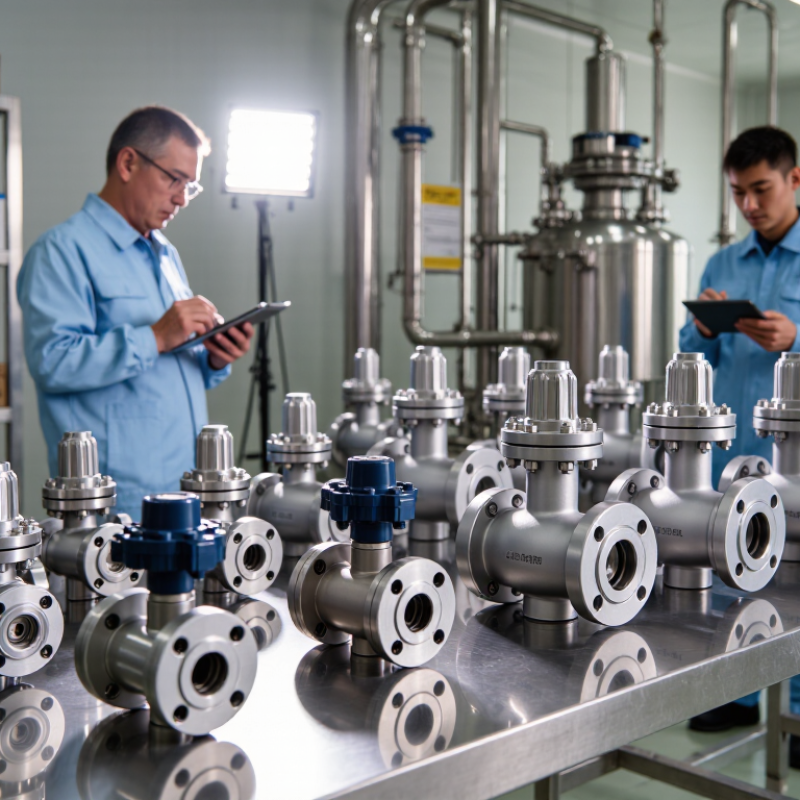
A back pressure regulator is a self-acting valve that maintains pressure upstream of its inlet.
Unlike a pressure-reducing regulator, it does not mainly protect the downstream side. It controls the pressure entering the valve by opening when upstream pressure exceeds its setpoint.
Inside, a spring, diaphragm, or piston senses pressure.
When pressure rises, the sensing element moves the valve toward an open position. This releases excess flow and stabilizes the process line. The setpoint is usually adjusted with a screw or control mechanism. Small changes can affect system performance.
In practical installations, the regulator may manage gas, air, steam, water, or compatible process liquids.
Selection depends on pressure range, temperature, flow rate, fluid cleanliness, and material compatibility. A body that suits water may perform poorly with corrosive media. That detail is easy to overlook.
During commissioning, technicians should install a pressure gauge near the inlet.
They should also check flow direction and inspect the sensing line for blockage. A valve can appear correctly adjusted while responding slowly. This often indicates contamination, incorrect sizing, or unstable upstream flow.
Manufacturers in China may offer different body materials, connection types, spring ranges, and testing options.
Reliable suppliers should provide pressure-test records, calibration information, dimensional drawings, and clear maintenance instructions. Certification claims still require verification. A polished datasheet is not enough.
The ideal setpoint is not always the lowest possible pressure.
Oversizing can cause hunting, while undersizing can restrict flow. Engineers sometimes discover this only after startup. That is why actual operating data deserves more attention than assumptions.
How Back Pressure Regulators Work in Industrial Systems
A back pressure regulator controls pressure upstream of its valve. It does not mainly regulate the downstream side. A sensing diaphragm detects inlet pressure and compares it with the spring setting. When inlet pressure rises above the set point, the valve opens further. This releases more fluid into the downstream line. When pressure falls, the valve closes gradually. The process repeats continuously.
In industrial systems, this action protects steady flow through compressors, reactors, separators, and pump discharge lines. For example, a regulator may hold a vessel near 6 bar while gas moves toward a storage unit. Spring-loaded designs suit stable flows and simple installations. Pilot-operated designs handle higher flow rates with better sensitivity, but they need cleaner impulse lines and careful maintenance. Sizing also matters. Engineers check flow rate, pressure drop, temperature, fluid density, and the valve’s flow coefficient.
Small details cause large problems. An undersized valve can create unstable pressure and loud vibration. An oversized valve may hunt around the set point. I have seen specifications focus on pressure while ignoring pulsating flow. That mistake is easy to repeat. Material compatibility, diaphragm limits, and installation direction deserve equal attention. A back pressure regulator is not a replacement for an independent relief device. Regular calibration confirms whether the displayed pressure matches actual plant conditions. Even accurate calculations need field review, because real piping often differs from the original drawing.
Back pressure regulators maintain a controlled upstream pressure by opening when inlet pressure exceeds the setpoint and closing as pressure falls. The chart shows typical industrial design setpoints for common services; actual values depend on equipment limits, process conditions, and applicable standards.
Back pressure regulators made in China cover several practical designs for process, gas, and liquid control. Spring-loaded regulators remain common because they are compact, economical, and easy to adjust. A handwheel changes the spring force above the diaphragm. This setting maintains upstream pressure when flow conditions vary. They suit water treatment skids, compressed air lines, and general industrial piping.
Pilot-operated back pressure regulators provide tighter control in larger systems. A small pilot valve senses pressure and directs the main valve. This design responds well to changing flow rates and higher pressure ranges. Dome-loaded regulators use a controlled gas or liquid signal instead of a mechanical spring. They are useful where remote adjustment and stable pressure control matter. Some Chinese manufacturers also produce sanitary versions with polished wetted surfaces. These regulators support food, beverage, and pharmaceutical processing requirements.
Material selection deserves close attention. Stainless steel bodies resist many corrosive media, while alloy options may handle harsher service. Seal compatibility depends on temperature, pressure, and fluid chemistry. Buyers should request pressure-test records, calibration data, and material certificates. Threaded connections work well on compact equipment. Flanged designs are better for larger pipelines and frequent maintenance. A catalog can make selection look easy. Field conditions rarely do. In my experience, undersized regulators create unstable pressure and noisy operation. Engineers should compare minimum flow, maximum flow, response speed, and cleaning conditions before approval. No type is universally best.
Evaluating China’s back pressure regulator manufacturers requires more than comparing unit prices. A capable supplier should explain how the regulator maintains upstream pressure under changing flow conditions. Request test data for set pressure, cracking pressure, hysteresis, leakage, and response stability. These figures should match your medium, temperature range, and operating pressure.
Factory evidence matters. Ask for a production-line video, material certificates, calibration records, and a sample inspection report. A reliable manufacturer can identify the valve body material, diaphragm compound, spring grade, and surface treatment. Confirm whether pressure testing is performed on every unit or only on selected samples. That difference affects risk. An audit should also examine machining accuracy, cleaning procedures, traceability labels, and final packaging. A polished brochure is not proof.
Communication reveals technical maturity. Send a realistic operating profile, including minimum flow, maximum flow, pressure fluctuations, and installation direction. The engineering team should respond with calculations, not vague assurances. Request prototypes before placing a large order. Test them with your actual gas or liquid, because laboratory results may not reflect field behavior. It is easy to overvalue certifications; they support reliability, but they do not replace performance testing. Delivery consistency, spare-part availability, warranty terms, and corrective-action records deserve equal attention. No supplier is perfect. A manufacturer that openly discusses failure modes may be more dependable than one promising zero problems.
| Evaluation Dimension | Measurable Indicator | Recommended Screening Benchmark | Evidence to Request | Suggested Weight |
|---|---|---|---|---|
| Pressure and Temperature Range | Maximum inlet pressure, outlet back-pressure range, operating temperature, and design pressure | The regulator should cover the required operating point with a documented safety margin. The selected pressure class and temperature rating must match the process design. | Datasheet, pressure-temperature rating table, sizing calculation, and design-condition confirmation | 15% |
| Pressure Control Accuracy | Outlet pressure deviation, hysteresis, droop, and repeatability under changing flow conditions | Require test results at low, normal, and maximum rated flow. Acceptance limits should be defined in the purchase specification rather than assumed from the nominal set pressure. | Factory test curves, calibration records, and performance data at multiple flow rates | 15% |
| Flow Capacity and Sizing | Cv or Kv value, minimum controllable flow, maximum flow, and pressure drop | The selected size should operate within the manufacturer’s controllable range and avoid excessive oversizing. Sizing must consider gas, liquid, vapor, viscosity, density, and flashing or cavitation risk. | Sizing worksheet, Cv/Kv data, process-fluid assumptions, and valve-sizing software report | 12% |
| Materials and Fluid Compatibility | Body, diaphragm, seat, spring, seal, and trim materials compared with the process fluid | Material selection should address corrosion, temperature, erosion, chemical compatibility, and contamination requirements. Sour-service applications should be assessed against ISO 15156/NACE MR0175 where applicable. | Material list, material certificates, seal compatibility chart, and corrosion-service declaration | 12% |
| Design and Manufacturing Quality | Quality management system, process control, traceability, and nonconformance handling | A current ISO 9001 certificate with a scope covering the relevant products is a useful baseline. Traceability should extend from incoming materials to final inspection. | Valid ISO 9001 certificate, process flow chart, inspection plan, quality records, and corrective-action procedure | 10% |
| Pressure and Leakage Testing | Shell test, seat leakage test, functional test, and test-medium control | Testing should follow the applicable product specification and agreed acceptance criteria. ISO 5208 may be used as a reference for industrial valve pressure testing where applicable. | Hydrostatic or pneumatic test reports, leakage class or acceptance criteria, calibrated-gauge records, and inspection release note | 10% |
| Applicable Certifications | Regulatory approvals and project-specific compliance | For European pressure equipment projects, determine whether the product falls within the scope of the Pressure Equipment Directive 2014/68/EU. Other markets may require different approval routes. | Declaration of conformity, certificate scope, notified-body documentation where required, and applicable test reports | 8% |
| Customization Capability | Connection standards, control mode, set-pressure adjustment, materials, accessories, and special cleaning | The manufacturer should provide a controlled engineering review for nonstandard pressure ranges, end connections, diaphragms, seals, surface finishes, and instrumentation. | Approved drawings, technical deviation list, change-control records, and sample engineering calculations | 6% |
| Delivery and Supply Reliability | Quoted lead time, on-time delivery history, production capacity, and spare-parts availability | Evaluate delivery using documented historical performance rather than quoted lead time alone. Critical spare parts should have defined availability and replenishment procedures. | Recent delivery statistics, production schedule, capacity statement, inventory policy, and spare-parts list | 5% |
| After-Sales Technical Support | Response time, troubleshooting capability, documentation quality, warranty, and service coverage | Require installation, commissioning, maintenance, and troubleshooting instructions in English. Support responsibilities and warranty exclusions should be written into the purchase contract. | User manual, maintenance schedule, warranty terms, service contact details, and sample technical response | 4% |
| Total Evaluation Weight | 100% | |||
Chinese back pressure regulator manufacturers serve demanding systems across chemical processing, water treatment, food production, and industrial gases. These regulators maintain upstream pressure while allowing controlled downstream flow. In a chemical plant, they can stabilize reactor pressure and protect metering pumps. In water treatment, they help manage dosing lines and filtration skids. Small details matter. Seat material matters.
Grand View Research estimates the global pressure regulator market reached about USD 16.4 billion in 2023, with growth expected through 2030. The report reflects wider demand for pressure control equipment. China’s manufacturing base supports customized regulators for steam, compressed air, nitrogen, hydrogen, and liquid media. Common configurations include stainless steel bodies, PTFE seals, remote sensing lines, and adjustable springs. Selection should follow pressure range, temperature, flow rate, and media compatibility. A regulator designed for clean gas may fail early in a corrosive liquid service.
Energy applications are also expanding. The International Energy Agency reported that global clean-energy investment was expected to exceed USD 2 trillion in 2024. This growth increases demand for reliable pressure control in hydrogen equipment, thermal systems, and industrial gas distribution. However, specifications can look perfect on paper. Field performance still depends on calibration, impulse-line layout, filtration, and maintenance discipline. Buyers should request test records, material certificates, leakage data, and repeatability results. Chinese suppliers with documented quality procedures can be strong partners, but independent verification remains sensible. Endless confidence is not engineering.