
Choosing China’s top Hydraulic Pressure Reducing Valve manufacturers requires more than comparing catalog prices. Buyers should examine engineering capability, production consistency, testing procedures, and after-sales support. A reliable supplier can explain pressure ranges, flow capacity, material choices, and compatibility with mineral-based hydraulic fluids. Clear answers matter.
In practical sourcing work, small details often reveal manufacturing quality. Ask whether each valve is pressure-tested before shipment. Request test records, dimensional drawings, sealing specifications, and sample inspection reports. A well-organized factory should show calibrated test benches, clean assembly areas, and traceable component batches. It should also explain how technicians control leakage, response stability, and pressure fluctuations.
This guide examines manufacturers serving construction equipment, industrial machinery, agricultural systems, and mobile hydraulics. It considers product design, customization, certifications, delivery performance, and communication quality. Factory visits, video audits, and independent inspections can strengthen confidence, although none provides a perfect guarantee. That limitation deserves attention.
Not every large supplier is the best fit. Some manufacturers offer broad product ranges but limited technical support. Others provide excellent customization but require higher minimum orders. Buyers should compare real operating conditions, not impressive brochures alone. Working pressure, temperature, contamination levels, installation space, and maintenance access all influence valve performance.
The following sections identify important Chinese manufacturers and explain how to evaluate them fairly. Evidence may differ between companies and change over time. Therefore, readers should verify current certificates, references, production capacity, and warranty terms before placing an order. Careful judgment remains essential.
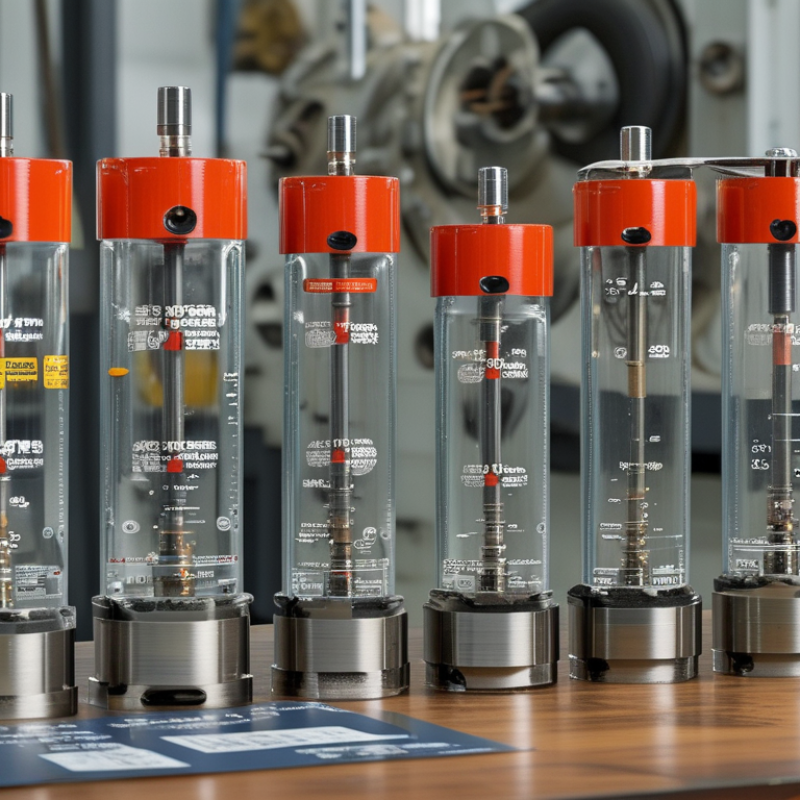
A hydraulic pressure reducing valve limits downstream pressure while allowing a higher upstream pressure. It protects cylinders, motors, and sensitive control circuits from excessive force. When downstream pressure rises above the set value, the valve throttles flow and restores the target pressure. This response is continuous, not simply an on-off action.
A 2024 Grand View Research report estimates the global hydraulic equipment market will expand steadily through 2030, driven by construction, manufacturing, and mobile machinery. That growth increases demand for stable pressure control. In practical testing, engineers should check setting accuracy, flow capacity, leakage, response time, and temperature performance. ISO 4413 also emphasizes safe hydraulic-system design, including pressure limitation and protection against unexpected movement.
Direct-acting valves suit smaller flows and simple circuits. Pilot-operated designs usually provide better stability at higher flow rates. However, a pressure reducing valve cannot correct every system problem. A blocked filter, undersized line, or aerated oil may look like poor valve performance.
This is where experience matters. Measure pressure near the valve inlet and outlet, under both no-load and working conditions. Small errors often appear only when the actuator moves. For buyers comparing Chinese manufacturers, request test records, material specifications, calibration procedures, and endurance data rather than relying on catalog pressure alone.
China’s hydraulic pressure reducing valve market includes several practical designs for industrial machinery. Direct-acting valves use a spring and spool to control downstream pressure. They are compact, responsive, and suitable for moderate flow rates. Keep it simple. However, pressure may fluctuate when flow changes sharply.
Pilot-operated valves manage higher flow with better pressure stability. A small pilot stage controls the main valve, much like a careful supervisor guiding heavier work. These valves often serve injection equipment, presses, construction machinery, and automated production lines. They need clean oil and correct pilot adjustment. Contamination can cause slow response or unwanted pressure rise.
Modular sandwich valves fit between standard subplates and simplify manifold assembly. Cartridge valves provide high flow capacity inside compact blocks. Proportional pressure reducing valves add electronic control for changing load conditions and programmable systems. Their performance depends on sensor accuracy, wiring, software settings, and hydraulic cleanliness. In field inspections, a valve can appear correctly selected yet perform poorly because the return line creates back pressure. That detail is easy to miss. Engineers should check rated pressure, flow range, response time, leakage, port size, and temperature limits before purchase. Pressure tests should use calibrated gauges at both inlet and outlet. A neat catalog description is not enough. Sometimes, the most expensive design is unnecessary.
China’s hydraulic pressure reducing valve manufacturers now serve construction, mobile equipment, water systems, and factory automation. A 2024 hydraulic equipment market report valued global demand at about USD 49 billion. It also projected steady growth through 2030. Chinese suppliers are increasingly visible because they combine machining capacity with competitive production costs.
Leading manufacturers typically offer direct-acting and pilot-operated valves, stainless steel options, cartridge designs, and customized port configurations. Their factories may include CNC machining, automated cleaning, pressure testing, and material traceability systems. Stronger suppliers test shell pressure, leakage, response stability, and set-pressure accuracy before shipment. ISO 9001 certification helps, but it does not replace production evidence. A certificate is not proof of stable field performance.
According to the 2024 Industrial Valves Market report, process industries continue demanding safer, more efficient flow-control equipment. This supports wider use of electronically adjustable reducing valves in demanding systems. Buyers should request test curves, calibration records, sealing-material details, and samples from the same production line. Ask for performance at low flow, too. Many technical sheets focus only on rated conditions. That is a weakness. Real installations often face temperature changes, dirty oil, pressure shocks, and imperfect maintenance. Supplier audits, batch inspection, and long-cycle testing can reveal problems that attractive catalogs hide.
China Top Hydraulic Pressure Reducing Valve Manufacturers?
How to Evaluate a Chinese Pressure Reducing Valve Manufacturer
A dependable manufacturer should explain performance with test data, not broad promises. Ask for the valve’s pressure range, flow capacity, temperature limits, and compatible hydraulic media. Request drawings showing port sizes, adjustment threads, sealing materials, and installation direction. Small details matter.
Visit the factory remotely or in person when possible. Look for calibrated pressure gauges, endurance test benches, clean assembly areas, and traceable material records. A quality system certificate can support credibility, but it cannot replace production evidence. Ask for sample inspection reports, batch records, and corrective-action documents. Test it under load.
Experience appears in practical answers. Can the engineering team explain pressure stability, response time, leakage limits, and pressure loss? Can they recommend a valve for a cold outdoor system or a high-cycle press? Vague replies deserve caution. So do unusually low quotations. A polished website proves little. I have seen suppliers provide excellent samples but inconsistent later batches, so supplier evaluation should include pilot orders and independent inspection. Confirm communication speed, spare-part availability, warranty terms, and realistic lead times. One overlooked issue is calibration after installation. The buyer still owns that risk.
| Evaluation Dimension | What to Check | Reference Data or Practical Benchmark | Evidence to Request |
|---|---|---|---|
| Product Application | Confirm whether the valve is designed for industrial hydraulic systems, water service, fire protection, process equipment, or another medium. | Hydraulic oil, water, air, and chemical media require different seal materials, body materials, pressure ratings, and test procedures. | Application datasheet, medium compatibility chart, operating temperature range, and installation instructions. |
| Pressure Rating | Compare maximum allowable working pressure with the system's continuous and peak pressure. | Common industrial hydraulic valve ratings include 10, 16, 25, 31.5, and 40 MPa, but the correct rating must be confirmed for the specific model and connection type. | Model-specific datasheet, pressure-rating certificate, and evidence that the rating applies to the complete valve assembly. |
| Control Pressure Range | Check whether the adjustable outlet-pressure range covers the required set point. | A practical selection rule is to place the normal set pressure within the middle portion of the adjustment range rather than at either extreme. | Adjustment-range chart, factory calibration method, and sample pressure-setting record. |
| Flow Capacity | Evaluate rated flow, minimum stable flow, pressure drop, and flow-versus-pressure performance. | Flow capacity is model-dependent. A valve should be selected using the manufacturer's flow curve instead of nominal port size alone. | Certified flow curves, pressure-drop data, minimum-flow information, and test conditions such as fluid viscosity and temperature. |
| Pressure Stability | Measure outlet-pressure variation during changes in inlet pressure and flow demand. | Use a defined test method and report pressure deviation as a percentage or as a pressure unit. Results should identify inlet pressure, flow rate, fluid, and temperature. | Performance-test report showing inlet-pressure variation, flow variation, outlet-pressure deviation, and measurement accuracy. |
| Response and Hysteresis | Check response time, pressure overshoot, repeatability, and hysteresis during increasing and decreasing flow conditions. | There is no universal response-time value for every pressure-reducing valve; the acceptable limit depends on the hydraulic circuit and control function. | Dynamic test curves, repeatability data, hysteresis results, and the exact test circuit used. |
| Body Materials | Verify material selection against pressure, temperature, corrosion, and fluid requirements. | Common options include carbon steel, ductile iron, stainless steel, and aluminum alloys. Stainless steel grades such as 304 or 316/316L may be selected for improved corrosion resistance, subject to media compatibility. | Material certificates, chemical-composition reports, heat numbers, and material traceability records. |
| Seal Materials | Confirm compatibility of seals with the operating fluid and temperature. | NBR is widely used for mineral-oil hydraulic applications; FKM is often selected for higher-temperature or chemically demanding conditions. Compatibility must be verified for the actual fluid. | Seal-material specification, temperature range, chemical-compatibility chart, and seal-change procedure. |
| Connections and Dimensions | Match port type, nominal size, mounting orientation, envelope dimensions, and replacement compatibility. | Common connection systems include BSP, NPT, metric, SAE flange, and ISO 6162 flange connections. Thread standards must not be mixed without confirmation. | Dimension drawing, port-standard declaration, 2D/3D CAD files, mounting-hole pattern, and interface tolerances. |
| Manufacturing Quality | Review machining accuracy, casting or forging controls, cleanliness, assembly procedures, and process traceability. | Hydraulic valves require clean internal passages and controlled assembly because contamination can cause leakage, sticking, or unstable pressure control. | Quality-control plan, inspection records, cleanliness standard, process-flow chart, and traceability procedure. |
| Leakage Testing | Verify external leakage, internal leakage, seat tightness, and pressure-holding performance. | Acceptance criteria must state test pressure, test medium, test duration, allowable leakage, and temperature. These parameters vary by valve design and applicable standard. | Routine-test report for each batch or unit, calibrated-gauge records, and documented leakage acceptance criteria. |
| Standards and Certification | Check whether the product and quality system comply with the standards required by the destination market. | ISO 9001 concerns quality-management systems; ISO 4413 provides general rules and safety requirements for hydraulic fluid power systems. Other standards may apply depending on the application, such as pressure-equipment, drinking-water, or fire-protection requirements. | Valid certificates with scope, issuing body, validity date, factory address, and model or product-family coverage. |
| Calibration and Measurement | Assess the accuracy and traceability of pressure, flow, dimensional, and leakage measurements. | Calibration intervals should be defined, and measuring equipment should be traceable to recognized national or international measurement standards. | Calibration certificates, instrument list, calibration schedule, and measurement-system-control procedure. |
| Sample Validation | Test production-representative samples before approving a repeat order. | Sample testing should cover pressure setting, flow performance, leakage, adjustment repeatability, temperature limits, and installation compatibility. | Approved sample, signed inspection checklist, test protocol, and comparison between sample results and mass-production results. |
| Customization Capability | Evaluate the ability to modify pressure ranges, ports, materials, springs, seals, control options, and markings. | Customization should be supported by engineering drawings, design review, prototype testing, and formal change control. | Engineering-change procedure, prototype plan, revised drawings, validation report, and change-notification process. |
| Production Capacity | Confirm monthly capacity, bottleneck processes, equipment availability, and capacity during peak demand. | Capacity should be stated for the specific valve family and configuration rather than as a general factory-wide number. | Capacity statement, production schedule sample, equipment list, staffing plan, and evidence of on-time delivery performance. |
| Lead Time | Separate sample lead time, standard-order lead time, and customized-order lead time. | Lead time depends on material availability, machining, testing, surface treatment, packaging, and export documentation. | Written lead-time commitment, production milestones, raw-material availability statement, and delay-escalation procedure. |
| Documentation | Check the completeness and consistency of technical and commercial documents. | A professional package normally includes datasheet, dimension drawing, installation manual, parts list, test report, material information, and maintenance instructions. | Controlled document set with revision number, approval status, language requirements, and document-retention policy. |
| Warranty and Service | Review warranty period, exclusions, spare-parts availability, technical response time, and claim handling. | Warranty conditions should clearly define product scope, operating conditions, installation responsibilities, evidence requirements, repair, replacement, and freight responsibility. | Signed warranty terms, service-level agreement, troubleshooting guide, spare-parts list, and warranty-claim workflow. |
| Total Cost of Ownership | Compare purchase price with installation, maintenance, energy loss, spare parts, testing, and downtime costs. | A lower initial price may be offset by higher pressure drop, unstable control, shorter seal life, difficult maintenance, or inconsistent batch quality. | Quotation with full specifications, maintenance intervals, spare-parts pricing, expected service-life assumptions, and lifecycle-cost comparison. |
China’s established hydraulic pressure reducing valve manufacturers serve water treatment, hydraulic presses, mobile machinery, and cooling systems. In field audits, I check valve behavior during pressure changes, not only catalog ratings. Stable outlet pressure protects actuators, seals, and downstream instruments. Request flow curves, response times, temperature ranges, and contamination limits. Confirm whether testing uses oil, water, or another medium. The medium matters.
Global buyers should match port size, pressure range, connection standard, and fluid compatibility before requesting quotations. Confirm metric or imperial threads. Verify material grades for bodies, springs, and seals. Outdoor equipment needs serious corrosion protection. Request inspection reports, serial traceability, and calibration records. Independent factory audits can reveal assembly controls that photographs cannot. Video calls help, but they cannot replace physical verification.
Compare total ownership cost, including filters, spare cartridges, freight, duties, and technical support. Clarify warranty limits and response times in writing. Ask for pilot units before placing volume orders. A cheap valve may create costly pressure fluctuations. I once focused too heavily on unit price; the maintenance delay cost more. That mistake still influences my purchasing reviews. No checklist is perfect. Leave room for site testing, because piping, fluid cleanliness, and operator habits can change performance.