What Are the Top Pneumatic Flow Control Valve Types in 2026?
In 2026, a Pneumatic Flow Control Valve remains a small component with a large effect on machine behavior. By metering compressed air, it can shape cylinder speed, cycle timing, and motion stability. The right choice depends on the actuator, load, air supply, and installation—not simply a product ranking. Small details matter.
This guide examines common options, including needle valves, one-way flow control valves, meter-in and meter-out arrangements, pressure-compensated designs, and proportional valves. Each works differently. A needle valve offers straightforward adjustment, while a one-way valve restricts flow in one direction and allows freer return flow. Meter-out control is often used to steady cylinder motion, but it is not ideal for every circuit. Proportional models can support finer adjustment, though they may add cost and setup complexity.
Real conditions deserve attention. A valve that performs well on a clean test bench may behave differently with long tubing, changing loads, or inconsistent air pressure. Check the manufacturer’s flow data, connection size, operating range, and compatibility with the rest of the system. Then test the selected valve under representative conditions. It is easy to overlook exhaust flow. That can lead to uneven motion or slower cycles than expected. No single type is best for every application, and even careful selection involves trade-offs. The sections ahead compare the main valve types, their practical strengths, and the situations where another option may make more sense.
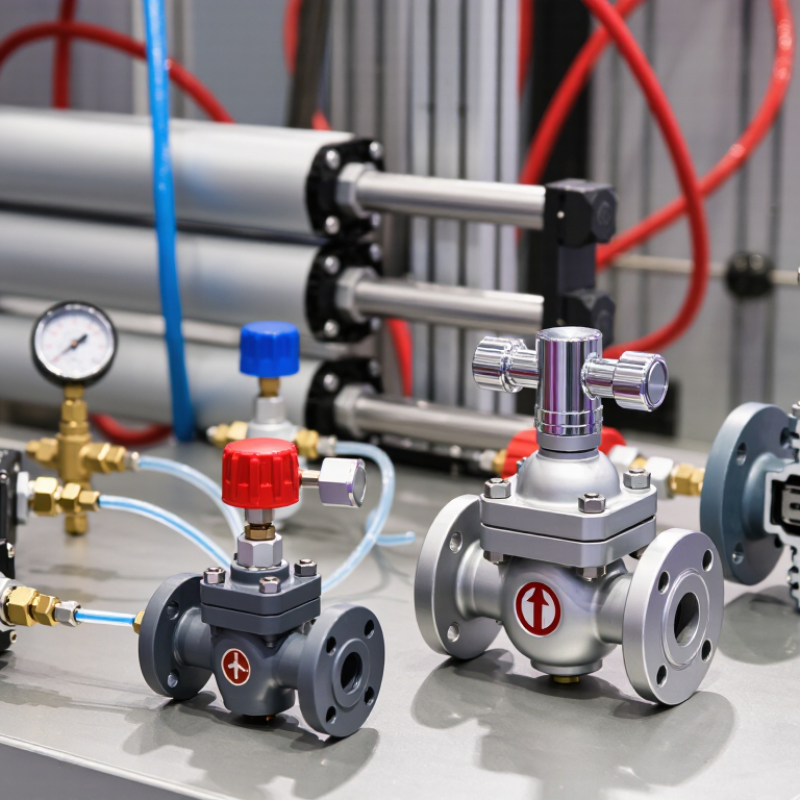
How Pneumatic Flow Control Valves Regulate Airflow
What Are the Top Pneumatic Flow Control Valve Types in 2026?
Pneumatic flow control valves regulate airflow by changing the size of an internal passage. A smaller opening restricts flow; a larger one allows more air through. This affects actuator speed, but not in isolation: load, supply pressure, tubing length, and friction also matter. A manual needle valve offers simple adjustment. A one-way flow control valve combines a restriction with a check valve, allowing free flow in one direction and metered flow in the other. For many cylinders, metering exhaust air helps produce steadier movement.
Proportional flow control valves can adjust airflow in response to an electrical signal, which supports more precise motion control. They also need compatible controls and careful setup. A flow valve is not a pressure regulator, and using one to correct unstable pressure can create a different problem. I’ve found that even a sensible setting may need another check after the machine warms up or its load changes. Small details get missed.
Tips: Adjust the valve in small increments, then observe a complete actuator stroke. Check for jerky motion, slow return, or unnecessary air noise. Keep notes; “almost right” is hard to repeat.
Key Designs and Operating Principles of Pneumatic Flow Controls
Pneumatic flow controls regulate how quickly compressed air enters or leaves an actuator. A needle valve uses a tapered stem and small orifice. Turning the stem changes the opening, allowing fine adjustment at low cost. It is simple, but small settings can be sensitive to dirt and vibration.
One-way flow control valves combine an adjustable restriction with a check valve. Air passes freely in one direction and is throttled in the other. This design is common for controlling cylinder speed: meter-out control restricts exhaust air, while meter-in control limits incoming air. The better choice depends on the load and motion. Meter-out often gives steadier movement, though it is not ideal for every circuit.
Pressure-compensated controls adjust the opening to maintain a more consistent flow as pressure changes. Proportional pneumatic valves use an electrical signal to vary flow continuously, supporting smoother speed changes and automated control. They need suitable controls and careful sizing. More features do not guarantee better performance.
In practice, check the flow range, port size, working pressure, and air quality. Test the actuator under its real load, not just with the cylinder moving freely on a bench. Small leaks or a shifting load can change the result. There is no universally perfect setting; a little retuning may be necessary after installation.
One-Way Valves for Meter-In and Meter-Out Control
A one-way flow control valve combines an adjustable restrictor with a check-valve bypass. Air meets resistance in one direction and flows freely in the other. For meter-in control, the restrictor limits air entering the actuator. This can suit stable loads, but changing loads may cause uneven motion. Meter-out control restricts exhaust air instead, creating back pressure that often steadies a moving cylinder. For vertical or overrunning loads, that difference matters. Small adjustments count.
The U.S. Department of Energy’s Improving Compressed Air System Performance sourcebook reports that leaks can waste 20–30% of compressor output in many plants. That figure describes system leakage, not valve losses, but it makes sound air management worth attention. A poorly chosen setting can still cause slow strokes, heat, or inconsistent cycle times. Check the actuator’s load, direction, and speed before selecting meter-in or meter-out control. Then test at operating pressure, not just on a bench. One detail is easy to miss: a clogged silencer can imitate a restrictive valve. I would recheck it. Use pressure gauges and observe the full stroke; a quiet, smooth cycle is useful, but it does not prove the setting is optimal.
Bidirectional, Precision, and Proportional Flow Control Valves
In 2026, pneumatic flow control valves are often selected by how air needs to move, not just by their labels. Bidirectional valves meter airflow in both directions, helping an actuator move smoothly during extension and retraction. A technician can adjust the valve and observe a cylinder across its full stroke. Too much restriction makes motion sluggish; too little can cause abrupt movement. Small changes matter.
Precision flow control valves offer finer adjustment when repeatable movement is important, such as on compact assembly equipment or test rigs. Their settings still depend on working pressure, tubing length, and the load on the actuator. Proportional flow control valves vary airflow in response to an electrical input, allowing speed to change during a cycle. With suitable feedback, a controller can make corrections as conditions shift. Air compresses, so response may not feel perfectly linear. That limitation is easy to underestimate. In real installations, matching valve capacity to the cylinder and checking the motion under load often matter more than choosing the most advanced control method. A careful setup helps.
What Are the Top Pneumatic Flow Control Valve Types in 2026? - Bidirectional, Precision, and Proportional Flow Control Valves
| Valve type |
How flow is controlled |
Flow direction |
Typical applications |
Main advantages |
Key considerations |
| Bidirectional needle valve |
A tapered needle varies the opening to restrict flow. The setting affects flow in either direction. |
Restricts both directions. |
General-purpose air-line adjustment and applications where both flow directions need restriction. |
Simple construction and straightforward manual adjustment. |
Flow can vary with pressure conditions and load; it is not inherently a constant-flow device. |
| One-way flow control (throttle-check) valve |
An adjustable restriction meters flow in one direction; an integrated check valve allows freer flow in the reverse direction. |
Meters one direction and allows free or low-restriction reverse flow. |
Adjusting pneumatic cylinder extension or retraction speed, depending on installation orientation. |
Combines directional control and adjustable throttling in one compact component. |
Correct port orientation matters. Meter-out control is commonly used for pneumatic cylinders to help maintain stable motion. |
| Precision metering valve |
A fine-thread or otherwise finely adjustable metering element provides small changes in the effective flow opening. |
Depends on valve design; check whether the selected model meters one or both directions. |
Low-flow adjustment, sensitive actuator-speed tuning, and pneumatic instruments or test setups. |
Supports finer manual adjustment than a basic coarse throttle in suitable operating conditions. |
Fine adjustment alone does not guarantee constant or calibrated flow; pressure, air quality, and the valve’s rated range matter. |
| Proportional flow control valve |
An electrical command changes the valve opening to regulate flow. Depending on the design, control may be open-loop or use feedback. |
Model-dependent; confirm whether the valve controls flow in one direction or both. |
Automated flow adjustment, variable-speed pneumatic motion, and systems requiring remote or programmable control. |
Enables dynamic adjustment from a control signal rather than repeated manual setting. |
Requires compatible electrical control and correct sizing. Accuracy and response depend on the valve, air supply, and control arrangement. |
| Pressure-compensated flow control valve |
A compensating mechanism adjusts the restriction to reduce flow changes caused by variations in pressure differential, within the device’s operating range. |
Depends on the specific design and port arrangement. |
Applications where more consistent flow is needed despite moderate pressure changes. |
Can provide steadier flow than a simple fixed restriction when operated within its specified range. |
Check minimum pressure differential, flow range, and suitability for compressed air; compensation does not remove all effects of changing conditions. |
Selection note: Verify the required flow range, port size, pressure and temperature limits, air-quality requirements, and control method against the technical specifications for the individual valve.
How to Match Valve Types to Pneumatic System Requirements in 2026
What Are the Top Pneumatic Flow Control Valve Types in 2026?
Choosing a pneumatic flow control valve starts with the motion, not the catalog label. For a standard cylinder, a one-way flow control valve combines an adjustable restriction with a check-valve bypass. It meters air in one direction and allows freer flow in the other. Small detail. Mount it near the cylinder port when practical, so the restriction controls airflow close to the actuator.
Meter-out control restricts exhaust air and often gives smoother speed when a load may overrun the cylinder. Meter-in control restricts incoming air and can suit loads that resist motion, but a descending load may run ahead. That distinction matters. Check cylinder bore, desired stroke time, operating pressure, tubing length, and load changes before selecting a valve. A restriction that is too small can waste pressure; one that is too large may be difficult to adjust precisely.
Needle-style flow controls suit straightforward, manually adjusted circuits. Precision or pressure-compensated options may help when supply pressure fluctuates or repeatability matters. Test at working load, not just on an unloaded bench; a muffler or long exhaust line can change the result. A neat calculation is only a starting point. Recheck speed and stability after installation, because real loads rarely behave perfectly.
Top Pneumatic Flow Control Valve Types in 2026
Typical functional features of common pneumatic flow-control valve types
How to read this chart: A value of 1 indicates a typical feature, not a performance rating. Needle valves meter flow; one-way flow-control valves meter in one direction and allow free flow through a check-valve bypass in the other; pressure-compensated valves are designed to keep flow more consistent as pressure changes; proportional valves vary flow in response to an electrical command. Features can vary by valve design. Match the valve to the required actuator speed control, load-pressure variation, and level of automation.