


Choosing a wood drying supplier in China can shape product quality, energy use, and production schedules. The right system should match the wood species, starting moisture, target moisture, and batch size. A kiln that works well for thin boards may not suit thick beams. Details matter.
This guide introduces leading Wood Drying Equipment suppliers and explains what buyers should compare before requesting a quotation. It considers equipment range, process controls, customization, technical support, and evidence of completed installations. Look for practical specifics: temperature and humidity control, airflow design, loading capacity, and options for monitoring each drying cycle. Ask how the supplier handles commissioning, operator training, spare parts, and service after delivery. Clear answers are more useful than broad promises.
Supplier claims still need checking. Request technical documents, references for similar projects, and a written scope covering installation and support. Compare proposed capacity with your actual production plan, not only the largest figure in a brochure. Visit a factory or review a running installation when possible. Small checks can prevent expensive surprises.
No single manufacturer is best for every operation. A small furniture workshop and a high-volume timber plant face different constraints. Even an experienced buyer can overlook local service or future expansion. This overview offers a starting point, not a substitute for technical assessment. Use it to build a shortlist, ask sharper questions, and identify which supplier can support your drying process over time.
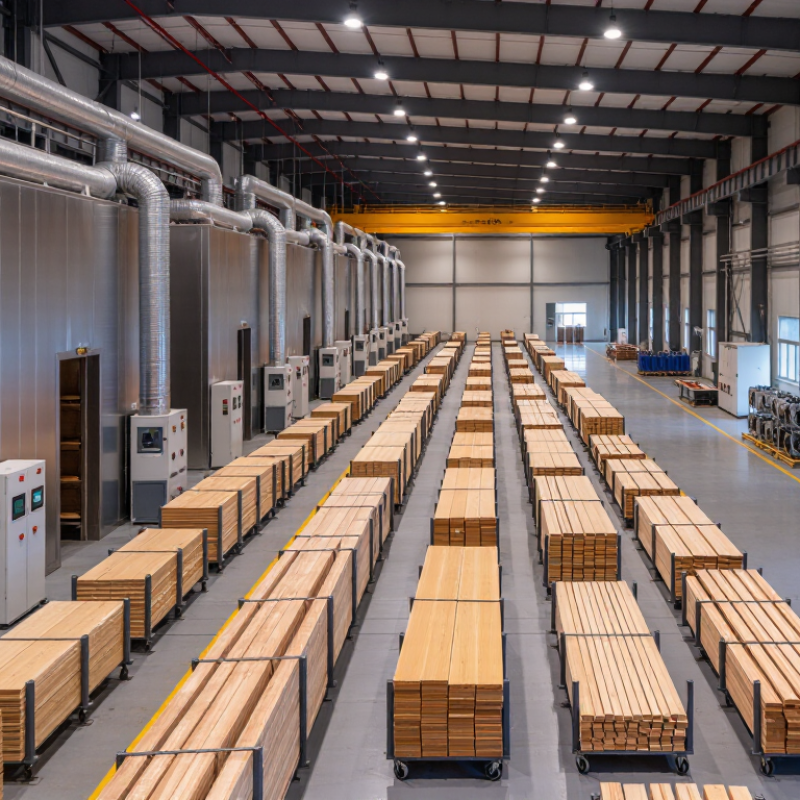
Wood Drying Equipment controls moisture, temperature, and airflow to prepare timber for stable use. Conventional kiln dryers use heated air and fans; operators adjust schedules to limit surface checking and internal stress. Dehumidification kilns remove water from recirculated air, often at lower temperatures. Vacuum systems reduce pressure, helping moisture leave thicker stock more quickly, though they require tighter process control. Solar kilns use captured heat, but performance depends on weather and careful venting.
The USDA Forest Products Laboratory’s Wood Handbook (FPL-GTR-190) explains that wood moisture content is measured against oven-dry mass; green wood can exceed 100 percent moisture content. That difference matters. A load of freshly sawn boards may vary widely, so one fixed schedule can overdry thin pieces while leaving thick ones wet. Core functions include circulating heat evenly, exhausting moist air, monitoring temperature and humidity, and tracking moisture with calibrated meters. Small details count. For example, poorly spaced stickers can block airflow and leave damp bands between boards. Drying capacity figures alone are not enough; energy use, batch consistency, maintenance access, and operator skill also deserve scrutiny. Even a well-designed kiln can produce uneven results. Industry practice still depends on the species, board thickness, and intended end use.
China’s wood-drying equipment sector serves a large, varied wood-processing industry. The National Forestry and Grassland Administration reported that China produced about 343.8 million cubic metres of wood-based panels in 2023. That figure is not a measure of kiln demand, but it signals the scale of downstream manufacturing. Furniture components, flooring, and panel production all depend on moisture control. In practice, mills need systems suited to species, board thickness, and local energy costs—not simply the largest kiln available.
China’s industrial landscape includes conventional batch kilns, continuous dryers, and heat-pump systems. The International Energy Agency identifies industrial heat as a major source of global energy use and emissions; its reports also stress the role of efficiency improvements and electrification. These broad findings matter to drying plants, where fans, heat sources, and exhaust control shape operating costs. Yet public data rarely isolates energy use for wood kilns in China. That gap makes supplier comparisons harder than brochure figures suggest. A useful evaluation should include moisture uniformity, drying time, energy consumed per cubic metre, and service response. Ask for test records using comparable wood and starting moisture. Real operating conditions can be messy. That is worth checking.
Leading Wood Drying Equipment Suppliers in China
China’s wood drying equipment sector serves sawmills, furniture factories, flooring producers, and engineered wood plants. The FAO Global Forest Resources Assessment 2020 recorded China’s forest area at about 220 million hectares. This large resource base supports steady demand for controlled drying systems. China’s National Forestry and Grassland Administration also reported forest coverage of 24.02% in 2021.
Leading suppliers usually offer vacuum kilns, conventional steam kilns, heat-pump dryers, and biomass-heated systems. The strongest suppliers provide more than chambers and fans. They should explain moisture sensors, airflow design, heat recovery, and control software in practical terms. In factory visits, buyers should inspect insulation joints, door seals, sensor placement, and the quality of electrical cabinets. Small details matter.
Energy performance deserves careful attention. The International Energy Agency continues to identify industrial heat efficiency as a major pathway for reducing manufacturing energy use. Suppliers claiming low consumption should provide test conditions, wood species, starting moisture, final moisture, and cycle duration. A catalogue number is not proof. I would also request drying records from similar climates and timber thicknesses. Some quotations look attractive, but weak after-sales support can increase downtime and uneven moisture. That risk is easy to underestimate. Supplier selection should balance equipment quality, process knowledge, spare-parts access, operator training, and measurable drying results.
| Anonymized Supplier Profile | Primary Equipment | Typical Heat Source | Typical Batch Capacity | Typical Operating Range | Moisture Target | Automation Level | Recommended Application |
|---|---|---|---|---|---|---|---|
| Profile 1: Industrial Kiln-System Supplier | Conventional steam, hot-water, or hot-air kilns | Boiler, biomass furnace, gas, or electric heater | 30–300 m³ per batch | 45–90°C drying air | Approximately 6–12% for many interior wood products | PLC control with temperature, humidity, and fan-speed monitoring | Sawmills, flooring manufacturers, furniture producers, and large wood-processing plants |
| Profile 2: Vacuum Kiln Specialist | Vacuum drying chambers with controlled heating | Hot water, electric heating plates, or radio-frequency assistance | 5–80 m³ per batch | Approximately 35–65°C product or chamber conditions, depending on process design | Approximately 6–12%, with shorter cycles for suitable species and thicknesses | Automated vacuum, temperature, pressure, and moisture-cycle control | High-value hardwood, thick timber, specialty wood, and producers requiring reduced drying time |
| Profile 3: Dehumidification Kiln Supplier | Heat-pump and dehumidification drying kilns | Electric heat pump with refrigeration-based moisture removal | 5–100 m³ per batch | Approximately 35–60°C drying air | Approximately 8–12% for furniture and interior applications | Digital control of temperature, relative humidity, and drying schedules | Small and medium sawmills, furniture workshops, and energy-conscious operators |
| Profile 4: Biomass-Heated Drying System Supplier | Hot-air kilns integrated with biomass heating systems | Wood chips, sawdust, bark, or other approved biomass fuels | 20–200 m³ per batch | Approximately 45–90°C drying air | Approximately 8–18%, depending on end use and wood species | Semi-automatic to PLC-based control with combustion safety monitoring | Integrated sawmill operations with readily available wood-processing residues |
| Profile 5: Containerized Kiln Supplier | Modular container or prefabricated drying chambers | Electric, gas, biomass, or external hot-water source | 10–60 m³ per batch | Approximately 40–80°C drying air | Approximately 8–18%, depending on the product specification | Digital temperature and humidity control with preset drying programs | Remote sites, pilot production, seasonal operations, and customers needing fast installation |
| Profile 6: Specialty Timber Drying Supplier | Low-temperature, solar-assisted, or hybrid drying systems | Solar thermal energy, electric backup, or low-temperature hot water | 5–50 m³ per batch | Approximately 30–60°C drying air | Approximately 10–20%, depending on climate, species, and final use | Basic to semi-automatic monitoring with data logging options | Small producers, rural facilities, reclaimed timber, and low-energy drying projects |
Comparing Chinese wood-drying equipment manufacturers requires more than checking chamber size or purchase price. The FAO’s Global Forest Products Facts and Figures 2022 reports approximately 485 million cubic meters of global sawnwood production. That scale creates demand for stable, repeatable drying performance. Ask each supplier for moisture-content uniformity data, drying curves, and complete-load test records. A polished brochure is not enough.
Energy use deserves close attention. The International Energy Agency’s Energy Efficiency 2023 report identifies industry as responsible for roughly 37% of global final energy consumption. Request measured energy consumption per cubic meter, not estimated savings. Compare fan efficiency, insulation thickness, heat-recovery options, and control accuracy. Check whether the quoted figure includes heating, fans, pumps, and standby periods. It often does not.
Inspect the supplier’s engineering depth. Review kiln airflow diagrams, sensor locations, software alarms, corrosion protection, and spare-parts availability. Ask for references using similar wood species, board thicknesses, and production volumes. Confirm testing methods against standards required in your destination market, such as ASTM D4442 or EN 14298. Factory acceptance testing is valuable; specify temperature tolerance, final moisture range, and load conditions in writing. A cheaper system may become expensive through uneven drying, extra rework, or delayed support. No scorecard is perfect. I would still leave room for local climate, operator skill, and future capacity changes. Supplier claims should be verified with operating records, not promises.
Choosing a wood drying equipment supplier starts with the lumber, not the catalogue. A kiln designed for thin pine boards may struggle with thick hardwood beams. Ask suppliers how they handle your species, board thickness, target moisture content, and seasonal production volume. Specific answers matter. So do sample drying records. Request data showing moisture variation across a loaded kiln, not only the average result. A few boards can look dry while the stack’s center remains damp.
Check the controls and the support behind them. Can operators adjust temperature, humidity, and airflow for different schedules? Ask to see how sensors are calibrated and what happens during a power interruption. Energy use deserves close attention, but compare figures under similar operating conditions. Otherwise, the numbers can mislead. Visit an operating site if possible, and ask staff about maintenance, spare parts, and response times. Confirm what installation and training include. A polished demonstration is useful, though it may not reflect a busy production day. I would also ask for a trial plan with agreed measurement methods; suppliers sometimes leave these details vague. That is worth questioning.